Introduction
Driving in traffic is the riskiest thing many people do while at work. Most people are not aware of this. But we are at risk of having a road accident whenever we drive for work.
In many countries, they are now the leading cause of work-related injury and death. In the EU it is estimated that road traffic accidents are responsible for four out of every 10 fatal work accidents. This does not include accidents involving drivers on their way to or from work. Moreover, many road users who are not driving for work get caught up in work-related accidents, and are often injured or killed (which is also not covered in the work accidents statistics).
This key article gives an overview of health and safety issues for those who drive for work. It covers professional drivers of lorries, buses or taxis. It also covers others who drive for work, such as those who make visits or drive to meetings, assignments or other company sites.
First, characteristics of the person, vehicle or activity are presented, that influence the risk faced by people who drive while at work. These characteristics are called ‘risk factors’.
Next, risk factors are presented for different types of workers who drive for work. In particular, we focus on risk factors and countermeasures for the drivers of:
- Heavy goods vehicles
- Light goods vehicles /delivery vans
- Motor cycles and bicycles (delivery and dispatch riders)
- Container transport
- Taxis and buses
As well workers driving to meetings, assignments, are included.
Finally, measures that help minimise the risks for various types of driver at work are provided
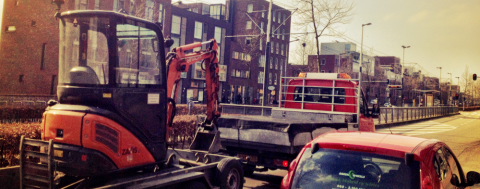
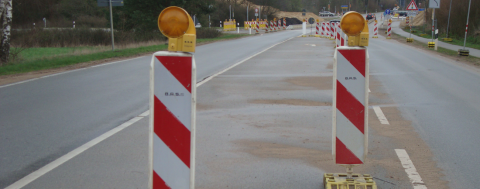
Risk assessment working on or near a road
We should assess the risks involved in using any vehicle while at work.
To do this we need to think about the existing problems that might cause harm during the planned driving task. We refer to these problems as hazards. In addition to hazards we need to describe any risks - potential situations that might lead to harm during the task. We need to think about the risks involved for both workers and other road users.
During the risk assessment we should also identify any control actions that are in place and find out whether they are sufficient to deal with the problem - if not we need to put additional controls in place.
Once we have looked at the threats (hazards and risks) involved in carrying out the driving task, we then need to assess the likelihood that each threat will result in an incident or accident. We also need to assess the consequences of such an incident or accident, should it occur.
A risk assessment does not need to be complicated. The basic idea is to think carefully about what can go wrong and how serious the consequences would be, so that adequate control measures can be put in place. The European Agency for Safety and Health at Work has developed an interactive risk assessment tool that might help. The Agency recommends a five step approach to carry out a risk assessment:
- Step 1: Identify hazards and those at risk
- Step 2: Evaluate and prioritise risks
- Step 3. Decide on preventive action
- Step 4. Take action
- Step 5. Monitor and review
It is important that we document the risk assessment. A document acts as a record to show whether the risk assessment has been done, and how it has been done. It is useful for other workers who need to assess the risks for the same or similar tasks in the future. It is also a useful record for managers and inspectors.
It is also important that we put in place a robust reporting mechanism that helps ensure that any incident that happens while an employee is driving for work is reported to management. We should investigate all such incidents to find out what caused them. We should then develop and implement control actions to prevent such incidents happening again.
Risk control levels Driving for Work
A fundamental way we can protect workers is to control their exposure to occupational hazards.
According to European legislation there are different types of measures that employers need to take to control any threats worker safety. The control measures are listed in order of effectiveness. Those at the top of the list are more effective because they address the potential hazard (the thing that could cause harm), rather than just reduce the risk (the harm that the hazard could cause).
The hierarchy of control measures can be summarized as follows:
- Elimination (e.g. avoid car transport for travel to meetings)
- Substitution (e.g. use vehicles with advanced safety solutions instead of vehicles with poor safety solutions)
- Engineering controls (e.g. choose vehicles with technical or physical safety barriers e.g. airbags)
- Administrative controls (e.g. train the workers and drivers to drive safely and to keep to safe driving and resting times)
- Personal protective equipment (e.g. insist on seatbelt wearing for drivers or helmet wearing for bike riders).
Safety culture Driving for Work
An organization that has an adequate or positive safety culture is one that values and has a strong focus on safety.
The following elements have been identified as characteristics of a good safety culture (Reason, 1997):
a) Informed culture: The organization collects information about accidents and incidents, and carries out proactive countermeasures through safety audits and surveys on safety climate.
b) Reporting culture: All employees report their errors or near misses, and take part in surveys, audits and other safety activity.
c) Just culture: An atmosphere of trust encourages and rewards its employees for providing information on errors and incidents. Employees know that they will receive fair and just treatment for any mistake they make.
d) Flexible culture: The organization has the ability to change its practices.
e) Learning culture: The organization improves safety by learning from incident reports, safety audits and so forth.
A good safety culture demands that top managers, take a leading role and serve as good examples. Manager commitment to safety and the company’s ability to use information to develop and improve safe working practices are perhaps the most important elements of a safety culture within an organization. A good way to set up an incident reporting system and limit administrative burden is to use electronic data recording devices, like on-board computers and event data recorders (“black boxes”). These allow us to register and analyse driving behavior, and by doing so gain insight into driving style (e.g. the amount of heavy braking) and unsafe behavior. Links between unsafe driving and accidents may be revealed, and act as important incentives to invest in safety and build a better safety culture. These systems also be benefit the company’s core business by increasing driving efficiency and decreasing the number of incidents and the time and costs associated with them.
Safety culture schemes require that managers are visibly committed to safety. This is difficult when the workers are normally away from the company premises, as is the case for professional drivers. Still, examples show that management can promote safe road behaviour by emphasizing the value of safe driving, promoting the sharing of information on accidents and near misses, and discussing the underlying causes of accidents.
There is a growing interest in safety culture in professional road transport. The importance of safety culture for actual safety has been clearly demonstrated and documented.
Speeding
Excessive and inappropriate speeds are the most important risk factor in road traffic.
They are a primary factor in one third of fatal accidents and an aggravating factor in all collisions. For a given increase in speed, the risk of a crash increases exponentially. This means that even a small increase in speed is much more dangerous than many people think. According to the European Transport Safety Council, even a 1 % reduction in speed leads to a 2 % reduction in injury accidents, a 3 % reduction in severe injury accidents and a 4 % in fatal accidents.
Driving over the speed limit is widespread among professional and non-professional drivers. It is therefore very important for road safety that we reduce speeding. This applies to all vehicles and all drivers.
According to EU regulations speed limiters are compulsory for heavy goods vehicles (HGVs) over 3.5 tonnes (typically 90 km/h). Vehicles with more than nine seats must be equipped with limiters that restrict speeds to 90 km/h or 100 km/h. Some countries restrict HGVs and buses to lower speeds than these. Similarly some companies set speed limiters to speeds that are lower than required by law, and find that this results in smoother driving, reduced fuel consumption and less accidents. Some organizations supply their vehicles with intelligent speed adapters in order to help drivers maintain speed limits.
The report “Driving for work: Managing Speed” by the European Transport Safety Council’s “PRAISE” project provides examples of speed management solutions implemented in vehicle fleets, as well as successful examples that operators and fleet managers can follow to manage the speed of vehicles being driven for work.
Fatigue and time pressure
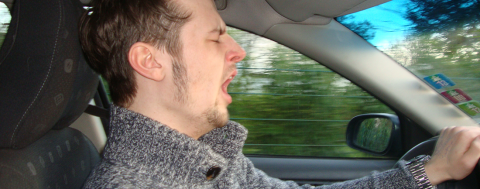
Fatigue is extreme tiredness resulting from mental or physical effort.
A fatigued driver will feel tired and possibly drowsy, and he or she may not be able to adequately perform the required driving task. Fatigue may also lead to drivers falling asleep.
It is well established that drivers who are fatigued are more likely to have a serious accident than drivers who are not fatigued. Research studies estimate that fatigue causes 20-30% of fatal road crashes. In line with this, reports based on comprehensive accident analyses place fatigue alongside alcohol as one of the major causes of road accidents. In many senses, however, fatigue is a bigger problem than alcohol. It is less well understood, it can neither be seen nor measured directly, and the onset of its effects is more difficult to predict. Evidence suggests that drivers are not inclined to postpone a journey as a result of feeling fatigued, and if they feel fatigued while driving they often carry on driving. Drivers are insufficiently aware of the risks associated with fatigued driving, and are not inclined to view driving while tired as socially unacceptable. The problem of fatigue while driving for work can be helped by proper journey planning and by implementing fatigue management programmes.
Time pressure and work-related stress decrease driver performance and vigilance and increase crash risk. Studies reveal that high levels of work pressure are predictive of road crashes in work-related drivers. Tight schedules constitute a risk factor both because drivers may be distracted from the driving task, and because they lead to speeding.
Distraction
There are three basic types of distraction:
- Visual - things that make drivers look away from or at irrelevant aspects of the road/traffic
- Cognitive – things that make the driver’s think about something other than the driving task
- Manual – things that make drivers take their hands off the wheel or carry out tasks not related to the driving task.
Often all three types are involved, for instance when drivers talk or text with hand-held mobile phones.
Distraction is a growing safety problem in road traffic due to the widespread use of electronic “nomadic” devices by drivers. Driver distraction is involved in between 20 and 30 % of road collisions. Most recent research has focused on the safety implications of mobile phone use. Studies show that using a mobile phone while driving affects performance in the same way that a blood alcohol level of 0.08 % does, and that mobile phone use – whether hand-held or hands-free –is associated with a four-fold increase in the risk of crash involvement. Using a hands-free mobile does not reduce the risks significantly because the risk factor involved when using mobile phones is mainly caused by the mental distraction involved.
Navigation devices must also be considered as a possible in-vehicle distraction for work-related driving, but may also have safety benefits. Modern devices may give real-time data that make it possible to receive and job-relevant information and instruction during driving. They may also give traffic information and have safety features (speed information, safety reminders etc.). Research reveals that navigation and information systems can improve safety, allowing for a more relaxed driving style and provide opportunities to better plan when and where to have breaks.
The risk of using mobile phones is generally not recognized by drivers. This applies particularly to hands-free mobile. It is thus important that employers to take action to reduce phone use and other distracting in-vehicle devices. Guidelines and advice are provided by European Transport Safety Council and the UK’s Royal Society for Prevention of Accidents.
Driving under the influence of alcohol or drugs
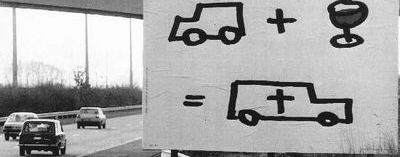
Driving under the influence of alcohol or drugs (DUI-driving) increases the risk of an accident dramatically.
Studies show that blood alcohol levels of 0.05-0.08 % increase the risk of traffic accidents with serious personal injury by a factor of 4. Alcohol levels of 0.08-0.12 % increase the risk by a factor of 13, and alcohol levels above 0.12 % increase the risk of serious injuries by a factor of 63. Some drugs also increase the risk of accidents, notably amphetamine and medicinal opioids. The combination of alcohol and drugs also increase accident risk substantially.
Refraining from DUI-driving is thus absolutely vital for road safety. All European countries have laws restricting the maximum blood alcohol levels permitted while driving, typically ranging from 0.00 % to 0.08 %. Despite laws and enforcement, drinking and driving remains a serious safety problem.
DUI driving is not a prominent risk factor for professional drivers. Nevertheless, professional road transport includes heavy vehicles, some of which carry many passengers. Thus when it does occur, DUI driving may have even more serious consequences than for other road users.
Alcohol interlocks are available which require the driver to blow into a device before starting the engine, and prevent the engine from starting if alcohol is detected. Trials with alcohol interlocks have provided promising results. Accordingly some countries like France and Finland have introduced mandatory alcohol interlock devices in school buses. According to European Transport Safety Council several EU countries have adopted legislation mandating the use of such devices. Swedish authorities require alcohol interlocks to be installed in the vehicles they purchase or lease, as well as those used by subcontractors.
Driving heavy goods vehicles (HGVs)
Heavy goods vehicles are a major risk factor in road traffic because their size and weight has very serious consequences when they are involved in road accidents. According to the European Commission more than 4,200 people were killed in accidents involving HGVs (> 3.5 tonnes) in 2009. Those most at risk for injury from HGVs are other road users, who are in smaller vehicles or unprotected; almost nine out of ten of those being killed in collisions involving HGVs are not HGV occupants. Even so the number of HGV occupants killed is also high; 320 were killed on European (EU-24) roads in 2020 (548 were killed on European (EU-24) roads in 2009). The number of injured HGV occupants will of course be higher, but is difficult to estimate due to lack of injury statistics.
There are several general risk factors involved for HGV drivers. The vehicles they drive can be difficult to manoeuvre and their view is often more restricted than it is for drivers of lighter vehicles. The work can often be monotonous with limited rest and sleep opportunities. HGV drivers often work independently and remotely, and therefore often lack the direct support from an organization or the leader.
Specific risk factors for HGVs
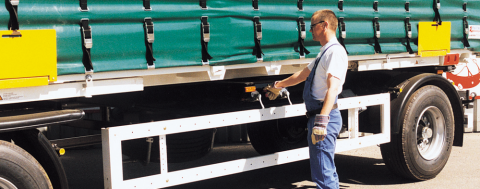
Securing of cargo is an important risk factor for HGVs. Shoves or vibrations may shift poorly secured cargo so that it falls off the vehicle or makes the vehicle tip over. Poorly secured cargo may also enter the driving cabin when the vehicle stops suddenly. A poorly balanced vehicle may also be unsafe to drive.
The European Commission has given important and relevant information about proper securing of goods. The general advice is to “Always secure cargo properly and drive smoothly, i.e. only deviate slowly from the straight line/constant speed situation. If this advice is followed, the forces exerted by the cargo will remain low and you should not encounter any problems”. More specific advice on relevant principles and techniques are given in the EU guidelines, the Health and Safety Authority and by the HSE.
Fatigue is a major cause of road accidents and thus an important risk factor. It has the potential to affect any driver, but is an increasing problem for professional drivers and in particular for long-distance drivers working long hours. Time since sleep and the amount and quality of sleep a driver has had before driving are important determinants of fatigue. Sleep opportunities and sleep quality may be restricted by a lack of suitable truck parking facilities. Driving in the early hours of the morning, or driving for prolonged periods without sufficient rest is also associated with increased crash risk. Regulations on driving hours are therefore implemented in Europe to prevent sleep-related accidents.
Lack of seat belt use is more common among HGV drivers than among other drivers. According to a Swedish in-depth study, 100 % seat belt use by HGV occupants could reduce the number of killed HGV occupants by 50 %. The problem is addressed by the EC Directive 2003/20/EC, which extends the obligatory use of seatbelts to occupants of all motor vehicles, including trucks.
Time pressure is an important risk factor because it decreases driver performance and vigilance and increases crash risk, not least because of speeding. Time pressure is made worse by unreasonable route schedules or delivery deadlines. Studies reveal that high levels of work pressure are predictive of crash involvement. EU directives prescribe speed limiters of heavy goods vehicles (> 3.5 t) restricting the speed to maximum 90 km/h. Some companies voluntarily set the speed limiters to 80 km/t, which has shown to give more relaxed and safer driving.
Restricted view is a particular problem for drivers of heavy goods vehicles. The size of the vehicle means that it is difficult for the driver to see what is going on around and behind the vehicle. The driver’s high position also gives limited vision immediately in front of and to the side of the vehicle. There are many accidents involving heavy goods vehicles hitting pedestrians and bicyclists located in the driver’s blind zones. In some countries (NL, DK, CH) more than 10 % of deaths involving HGVs occur while the HGV is performing a nearside turn (right hand turn in most EU countries).
Effective control measures
Important measures to control the specific risk factors associated with HGV driving include the following:
- Secure cargo: The driver must know and apply appropriate principles and techniques for securing loads. They must ensure that proper securing equipment is in place and in good condition. There are numerous guides and descriptions on how to secure loads. Advice on specific principles and techniques are given in the EU guidelines and, for curtain and rigid-sided lorries, by the HSE and the Health and Safety Authority.
- Reduce time pressure: The introduction of compulsory speed limiters and driving and resting time regulations for HGVs should help mitigate time pressure among HGV drivers. Some companies (e.g. in Norway) have set the speed limiters to lower speeds than required by law with positive results. Some companies/organizations supply their vehicles with intelligent speed adapters in order to help drivers maintain speed limits.
Manage fatigue: HGVs are subject to driving and resting regulations, but these alone may not control fatigue sufficiently. In order to control fatigue the employer can help by providing an adequate driver’s schedule ensuring that opportunity for sleep is: a) long enough, b) appropriate for recuperative sleep, and c) routine and predictable.The company can intervene at four levels to control those factors associated with fatigue and manage fatigue outcomes:
- Limit the consequences of fatigue on driving performance.
- Prevent fatigued drivers falling asleep while driving.
- Prevent fatigue developing during driving.
- Prevent a driver entering a vehicle while fatigued.
Employers should prioritise intervention at levels 3. and 4. Special fatigue management programs have been developed that provide tools to cope with fatigue problems at each of these levels.
- Restriction of view: The problem of restriction of view is addressed by the EC Directive 2003/97/EC on the fitting of blind spot mirrors on new vehicles and Directive 2007/38/EC on retrofitting mirrors to heavy goods vehicles. However even if these requirements are fully implemented the potential for blind spots around HGVs still remains. Additional control measures include awareness-raising both among HGV drivers and among other road users, in particular cyclists and pedestrians.
Driving light goods vehicles and delivery vans
Light goods vehicles (LGVs) and delivery vans are goods vehicles with a maximum permitted weight below 3.5 tonnes. Accidents statistics show that the number of LGV occupants killed is relatively high; 635 were killed on European (EU-24) roads in 2020 and every year around 4,000 LGVs are involved in fatal road accidents in Europe.
LGVs are being increasingly used for endpoint deliveries due to entry restrictions placed on HGVs in urban areas. The share of LGVs in urban traffic is thus increasing. Urban areas typically have dense and complicated traffic. Maneuverability can be restricted, parking facilities can be poor and loading and unloading of the vehicle can be difficult. The result is that great demands are often placed on the LGV driver.
According to UK data, drivers of LGVs are more likely to be involved in fatal and serious collisions than other road user groups, and speeding is often involved. Dutch studies find that red-light running is a major reason for accidents involving delivery vans. Collisions caused by restricted review while reversing are also typical accidents for LGVs.
Studies show that 30 % of those who are killed in collisions involving LGVs are occupants of the LGV. Around 20 % are pedestrians, 8 % riders of motorcycles and 6 % cyclists.
LGVs are more likely than other vehicles to be involved in road accidents with severe consequences. This is due to characteristics of both the vans and the drivers. Many vans are used for business purposes (e.g. service companies, carpenters, industrial contractors, couriers). Reports claim that there is a need for these sorts of businesses to optimize their safety performance to improve the safety attitudes of drivers and potentially reduce road accident involvement. Because van drivers work more remotely than most other workers, it is important to look for ways that managers can influence drivers and help drives them adopt good safety attitudes (Zohar et. al 2013).
The following highlights some of the road safety problems of LGVs (Dutch Ministry of Transport, Public Works and Water management, 2009):
- LGVs are involved in a relatively high number of serious accidents.
- The number of LGVs has grown dramatically in Europe over the last 10-15 years.
- There is no additional driving training necessary for driving LGVs despite the fact that such vehicles pose a relatively large threat to other road users (larger mass, moveable cargo).
- They are often driven on urban roads where they frequently come into contact with vulnerable road users.
- They are often driven by drivers under time pressure.
- The drivers generally do not own the car they drive.
The drivers are often young with little driving experience.
Specific risk factors for LGVs
Dense (urban) road traffic with lots of other road users increases the risk of crashes involving LGVs. Indeed, in one Australian study light/short-haul transport drivers selected traffic negotiation as their greatest safety challenge. LGV drivers typically drive short distances with frequent stops involving loading and unloading. The urban environment with dense traffic, limited space and poor parking facilities and poor manoeuvrability often creates a time-pressured working day in which many LGV drivers experience stress and cope by engaging in a number of illegal and potentially dangerous activities such as speeding, illegal parking and running red lights. More LGV drivers than other drivers do not use seatbelts according to the SafetyNet project (ETSC 2013, p21).
Lifting and manual handling of freight is a safety problem for LGV drivers. It can also be a risk factor for back and other injuries. Poor parking and unloading facilities at delivery sites increase the injury risk associated with cargo handling for LGV drivers, for instance by forcing them to unload and carry freight in and across busy roads.
Fatigue is a major cause of road accidents. It has the potential to affect any driver, but is an increasing problem for professional drivers. Fatigue has been identified as an important risk factor for HGV drivers and the EU and its member countries enforce driving and resting time regulations to reduce the problem.
For LGV drivers who often drive in urban areas during the day, the problem with fatigue differs from that of HGV drivers. For LGV drivers the main contributors to fatigue are inadequate sleep, insufficient rest brakes, heavy traffic, driving in early afternoon, poor vehicle design and ventilation. Although different in nature, driver fatigue may occur as often and its consequences be as serious for LGV drivers as it is for HGV drivers. Thus fatigue is a prominent but largely overlooked risk factor for LGV drivers, who are not regulated by the driving and resting time regulations that govern HGV and long-distance passenger transport.
The most important organizational level influence on fatigue appears to be the driver’s schedule, not least because it determines whether the opportunity for sleep is long enough, given at a time of day that is appropriate for recuperative sleep, and routine and predictable.
Special fatigue management programs have been developed that provide tools to cope with fatigue problems.
Time pressure decreases driver performance and vigilance and increases crash risk. High levels of work pressure are predictive of crash involvement. Tight schedules constitute a risk factor because they distract drivers from the driving task and not least because they lead to speeding.
Restricted view is a particular problem for HGV drivers, but also for LGV drivers. In-depth studies reveal that blind spots have contributed to many fatal LGV accidents, which typically occur when the LGV hits pedestrians or cyclists while the driver is turning or reversing.
Effective control measures
- Manage fatigue: In order to cope with fatigue the employer can help by providing an adequate driver’s schedule that ensures that opportunity for sleep is:
a) long enough, b) given at a time of day that is appropriate for recuperative sleep, and c) routine and predictable. The company can intervene at four levels to control those factors associated with fatigue and manage associated fatigue outcomes:
- Limit the consequences of fatigue on driving performance
- Prevent fatigued drivers to fall asleep when driving
- Prevent fatigue developing during driving
- Prevent a driver entering a vehicle while fatigued.
Employers should prioritise intervention at levels 3. and 4.
Special fatigue management programs have been developed that provide tools to cope with fatigue problems.
- Practice safe cargo handling: It is very important that the driver knows and applies good practice for manual cargo handling. There are many guides and descriptions available of how to this. More specific advice on specific principles and techniques is given by the European Agency for Safety and Health.
- Reduce time pressure: Light goods vehicles are not governed by driving and resting regulations nor equipped with compulsory speed limiters. The deployment of intelligent speed adapters could be a good way to help drivers stick to the speed limits and possibly to mitigate time pressure and work related stress among LGV drivers. Effectiveness relies on manager attitudes, the company safety culture and the pay system.
- Implement safe pay systems: Avoid pay systems based on delivery performance and piecework.
- Promote safe driving style: LGV drivers often break the traffic regulations and put themselves and other road users at risk. Encouraging safer driving style has the potential of improving safety among LGV drivers. Drivers should avoid illegal parking, in particular in cycle and pedestrian areas, and try to avoid reversing. They should wear seatbelts and respect traffic lights, speed limits and general traffic rules.
- Select and maintain safe vehicles: Choose vehicles with systems to assist the driver such as reverse collision warning, side curtain air-bags or cargo barriers.
Delivery and dispatch riders
Delivery and dispatch riders on bicycles or powered two-wheeled vehicles are more at risk for traffic accidents than many other professional drivers. They are less visible than cars and typically ride in heavy city traffic with complicated road user interplay. Motorcycle and bicycle riders were respectively involved in 21 % and 10 % of fatal or serious traffic accidents in London in 2006, but only accounted for about 3 % of kilometres travelled (OSHA, 2010). Studies of bicycle messengers in Montreal show that they are six times more at risk for an accident than ordinary cyclists (Messengervilles, 2008, cited here). On top of this the recent growth of delivery work organized via digital platform, often by use of e-bikes, creates additional risky situations.
Riders of two-wheeled vehicles are not afforded the physical protection of a car or larger vehicle. When they are involved in accidents, they are therefore also more likely to get injured or killed than other road users are. For riders of powered two-wheelers the high risk is due to a combination of high speeds and low protection. Protective clothes, boots, gloves and in particular helmets are important safety measures for riders of two-wheeled vehicles. There is also clear evidence that rider attitudes and driving style contributes significantly to their accident risks.
Specific risk factors for delivery and dispatch riders
Heavy urban traffic: Delivery and dispatch riders typically ride in urban areas where there are numerous and often complicated and demanding encounters with other road users.
Poor visibility: Compared to other road users, bicycles and motorcycles are small and often overlooked in traffic. In many collisions between bikes and larger vehicles the driver of the larger vehicle did not see the bike. Poor visibility is thus a very important risk factor for delivery and dispatch riders.
Time pressure: Delivery and dispatch riders often have strict delivery deadlines, often with guarantees. It is well documented that time pressure can decrease driver performance and vigilance and increase crash risk. High levels of work pressure are predictive of crash involvement. Tight schedules are a risk factor because they distract drivers from the driving task and not least because they lead to speeding.
Safety equipment including helmets and protective clothes/boots/gloves are often not available or not used.
Unbalanced, awkward loads: Two-wheeled vehicles have less carrying capacity than other vehicles. Cargo weights are also high in relation to the weight of the vehicle. The result is often unbalanced, awkward and thus dangerous loads.
Criminal acts such as robberies constitute a risk because they carry valuable goods and or money. Delivery and dispatch riders also risk facing aggressive clients (OSHA).
Effective control measures
- Use personal protective equipment: Use protective clothes, boots, gloves, and in particular helmets. These are important safety measures for delivery and dispatch riders.
- Improve visibility: Use headlights whether it is light or dark, and wear high-visibility clothing.
- Adopt a safe driving style: Delivery and dispatch riders often break traffic regulations and put themselves and other road users at risk. Adoption of a safer driving style has the potential of improving safety among delivery and dispatch riders. This includes respecting pedestrian areas, traffic lights and the general traffic rules.
- Use safe pay systems: Avoid pay systems based on delivery performance and piecework.
- Discourage crime: Limit the amount of cash carried and avoid handling money in public view.
More detailed guidelines and good practice recommendations to cope with risk factors faced by delivery and dispatch riders, including delivery work organized via digital platforms are provided by the European Agency for Health and Safety at Work.
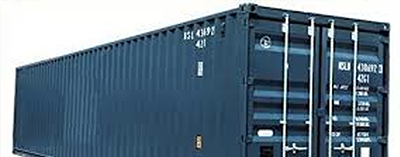
Container transport
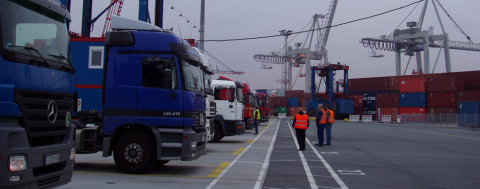
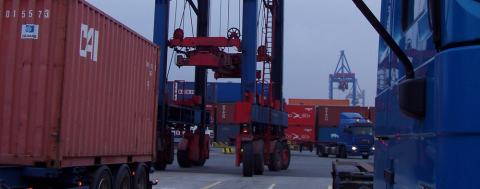
Containers constitute a very large part of the goods transport on European roads. If not properly secured they can inflict great damage and harm to other road users, buildings and the environment.
A survey by the Norwegian Accident Investigation Board (AIBN) showed that drivers of hook-lift containers regard the lack of standardisation concerning container locking devices as safety critical. They also state that many worn-out and hazardous containers are still in use, and that containers are often unevenly loaded or top heavy. The drivers think that specific standards and maintenance procedures for containers should be implemented.
AIBN concludes that the different standards used for hook-lift containers is a threat to safety. They also point out that containers are often not marked to ensure that they the fit hook-lifts and vehicles they are used with. The lack of inspection of hook-lift containers is also given as a risk factor. Several accidents have occurred due to insufficient locking and securing of hook-lift containers.
Further information on containers and associated risks is given in the Key Article “Workplace Transport” of this e-guide.
Specific risk factors for container transport on roads
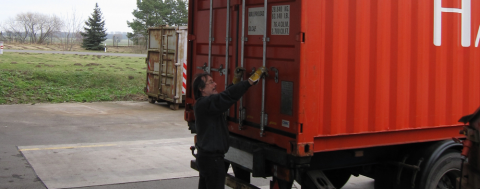
Loading of containers is a safety critical aspect of container transport. The contents of containers are normally not visible to the drivers who transport them. Drivers may also lack awareness of uneven weight distributions or top-heavy containers.
Securing of containers is a safety critical aspect. Road accidents involving containers often happen because the container falls off the vehicle. Securing devices are often defective due to metal fatigue, rust, fractures or other wear and tear. Accident investigation reports reveal that defective securing devices are a major causes of accidents.
Different standards are in use for containers. Containers can be built to suit the customer, and there are also varying standards for construction in different countries. The lack of common standards makes container transport unnecessarily dangerous because the vehicles and containers do not always fit each other. If the hook container was covered by a joint EU directive such as the Machinery Directive, it would be possible to harmonize standards and improve the safety of hook container transport.
Marking of containers is a safety critical issue precisely because there are different types and standards in use. Containers rarely have sufficient markings that give information about producer, dimensions etc. This makes selection of a suitable transport vehicle difficult. The result is that containers are often placed on vehicles that do not properly fit the container.
Maintenance of containers is vital in order to ensure that locks and other securing devices work properly. Containers are often subject to severe wear and tear, especially during handling. Damages and metal fatigue can only be expected. Poor container maintenance was identified as a crucial risk factor in a Norwegian study of road accidents involving container transport.
Effective control measures
There are comprehensive guidelines about securing containers. Below, we have listed some general principles. For more extensive guidelines we refer to the references given below.
- Use vehicles that fit the container. There are many different types of container and a common problem is that containers are often modified manually to fit the vehicle that will transport it. Such modifications increase the risk of containers falling off the vehicle. It is thus important to use only vehicles that are meant to carry the container.
- Mark containers clearly. Containers should be clearly marked so as to identify the type of container. Clear markings can reduce the problem of ill-fitting vehicles.
- Avoid overloading and uneven loading. The cargo should never exceed the permitted payload. The load should be evenly distributed across the container floor area. Lighter goods should be stowed on top of heavier goods. The centre of gravity of the loaded container should be below the midpoint of its height. A tightly packed cargo is less likely to move than cargo with spaces between parts of the load. If the cargo does not fit the container dunnage should be used to fill the gaps.
- Ensure proper securing. The container should be secured to resist any forces that might be expected during the journey. Twist locks, lashes and other securing equipment must be maintained, checked and applied according to the rules.
Comprehensive guidelines about securing containers are provided in the “Container Handbook” published by the German Marine Insurers. Also EU’s best practice guidelines on cargo securing for road transport includes guidelines on securing containers for road transport. The International Labour Organization (ILO) as well as EU-OSHA have provided comprehensive overviews of safety critical issues involved in container transport and also listed a large number of existing guidelines.
Taxi driving
Taxi driving involves particular types of driving risk. The overall risk of a taxi being involved in a road traffic accident is similar to that for any other private car. However, since taxis drive more in built-up areas they often have to manoeuvre in more complicated and demanding traffic. This means that taxis are typically involved in rear-end crashes, intersection collisions and collisions involving pedestrians and bicyclists. Taxis are overrepresented in door crash collisions with bicyclists and accidents are often related to poor observation (U-turns and reversing) and poor judgement of distances. Despite this taxi drivers are less to blame for the collisions than other road users are.
Specific risk factors for taxi driving
Not wearing seatbelts is an important and common risk factor for taxi drivers who have low belt usage rates. The reason for this is probably convenience, because they are in and out of the car so much. However, the seatbelt is probably the most effective traffic safety measure invented. Taxi drivers could improve their safety dramatically by wearing the seatbelt.
Fatigue due to irregular shifts and night driving can be a very important risk factor for taxi drivers. According to an Australian study the relative risk of crash-related mortality and injury is increased by 60 % for those taxi drivers who work nights.
Verbal or physical abuse is a risk faced by many taxi drivers who work in the city at night, especially when many passengers will have been drinking. According to a further Australian study taxi drivers are seven times more at risk of violence than the average worker. It is thus of utmost importance for taxi drivers to stay alert. Eye-contact and polite communication with the passenger is important. Drivers should not carry large amounts of cash, and any cash carried should be hidden from view. Drivers should explain the reasons for having to take a deviant route, and explain the fare structure before the trip. The fare should be settled while the passenger still is in the car.
Distraction is a major risk factor for taxi drivers who are often subject to distractions inside and outside of the vehicle. Those inside include fare meters, GPS-navigation devices and mobile phones, often used in both professional and private communications. The taxi driver must also pay attention to the passenger comfort and behaviour, communicate with passengers, select the right route etc. Distractions outside the taxi are due to the complicated traffic environments typical for taxi drivers. In summary the driving task for taxi drivers is difficult and demanding while at the same time they are subject to numerous distracting elements.
Speeding is in general not a very prominent risk factor for taxi drivers, except perhaps during night-time driving with low traffic. Intelligent Speed Adaptation systems informing the driver about current speed limits or even warning the driver if he drives above the limit, have been adopted by some Swedish taxi companies (Gävle taxi, TaxiBil Syd). Alcohol interlocks have also been adopted by some taxi companies. One example is in Belgium where it resulted in a 20 % business increase, according to ETSC.
Effective control measures
- Manage fatigue: In order to cope with fatigue the employer can help by providing an adequate driver’s schedule that ensures that the opportunity for sleep is: a) long enough, b) appropriate for recuperative sleep, and c) routine and predictable.The company can intervene at four levels to control those factors associated with fatigue and manage associated fatigue outcomes:
- Limit the consequences of fatigue on driving performance
- Prevent fatigued drivers to fall asleep when driving
- Prevent fatigue developing during driving
- Prevent a driver entering a vehicle while fatigued.
- Use personal protective equipment. The seatbelt is probably the most effective traffic safety measure invented. It is highly protective even at low speeds. Taxi drivers should be made aware of this and should use seatbelts at all times.
- Adopt a safe driving style. Taxi drivers frequently break traffic rules. They may speed and run red lights, and put themselves and other road users at risk. An improved and safer driving style has the potential of improving safety among taxi drivers.
- Employ advanced driver assistance systems. Intelligent speed adaptation could be used to help taxi drivers adhere to speed limits. Adaptive cruise control and other forms of advanced driver assistance systems could improve safety for taxi drivers and passengers. Some systems can help drivers by taking over tasks that would otherwise be distracting for drivers.
- Discourage criminal acts. Drivers should limit the amount of cash carried and avoid handling money by encouraging customers to pay by transfer methods using chip and PIN systems. They should carry silent alarms to trigger assistance and protocols should be established with the police that assist drivers in the event of a crime. Guidelines and training modules are available to inform drivers on prevention measures. These include guidance on how to behave towards aggressive customers, how to colleagues who are victims of violence and how to avoid robbery.
The European Agency for Safety and Health at Work has published a thorough review of good practice guidelines for taxi driving. This addresses the different risk factors for taxi drivers. The International Road Transport Union (IRU) has made available a taxi driver check list in order to promote safe driving among taxi drivers. Safety advice for Taxi drivers has also been given by among others North Hertfordshire District Council (UK) and by Victoria Taxi Directorate (Australia).
The European Transport Safety Council published a report in 2016 aimed at improving safety standards in the taxi industry in Europe. https://etsc.eu/making-taxis-safer-managing-road-risks-for-taxi-drivers-their-passengers-and-other-road-users/
Bus and coach driving
Across 27 EU countries an average of 1,200 people were killed in accidents involving buses and coaches in each of the years between 2005 and 2008 (DaCoTA). Across 24 EU countries 902 people were killed in in 2009. 16 % of those killed in 2009 were bus or coach occupants.
Road fatalities that are the result of accidents involving buses and coaches are responsible for only 2.4 % of the total number of road deaths in Europe according to a report by the ETSC. When bus and particularly coach accidents do occur, they can result in a large number of victims due to the high occupant numbers, and thus draw a lot of attention from the media. Despite this, the most common victims of such accidents are car occupants (35 %) and pedestrians (30 %).
For bus drivers non-driving activities, such as dealing with the public and handling luggage, account for the greater proportion of injuries or ill health (EU-OSHA report “Managing risks to drivers in road transport”, p. 116).
Specific risk factors for bus and coach driving
Time pressure and work-related stress decrease driver performance and vigilance and increase crash risk. High levels of work pressure are predictive of crash involvement.
Research has documented a high level of stress among bus drivers. A German study detected “psychological stress” among 90 % of bus drivers. Important stress factors highlighted by drivers were limited scope for making own decisions, risky work situations and passenger behaviour. The drivers rated need for constant vigilance and responsibility for their passengers as most stressful, followed by poor weather conditions and time pressure. A recent Norwegian study (in English) shows that time pressure at work was the strongest predictor of work-related health problems among bus drivers. Drivers who work split shifts often have working hours that coincide with rush hours. These drivers may experience more time pressure and work-related stress.
Fatigue due to shift work and irregular work hours can be an important risk factor for bus and coach drivers. Studies from the UK reveal that 9-12 % of bus drivers admit to having fallen asleep whilst driving and that 30-50 % of serious collisions are related to drivers being too tired. Sleep behind the wheel may be more of a problem for long-distance express or inter-city bus drivers.
Fatigue may also be a result of constant pressure from route timetables or delivery deadlines.
Distraction can be a particular risk for bus and coach drivers. There are distractions both inside and outside of the vehicle. Buses and coaches are normally equipped with communication devices and GPS-navigation. The drivers may also have mobile phones for professional or private use. The bus and coach driver must also pay attention to the passengers’ comfort and behaviour while driving. Bus drivers often drive large vehicles through narrow streets in complicated city traffic also presenting many distractions to the driver.
The driving task for bus drivers can thus be summarized as one that is more difficult and demanding than it is for the ordinary driver while at the same time also subject to numerous distractions.
Violence and harassment Bus drivers risk facing harassment and abuse from passengers. They can also be victims of serious criminal acts such as violence or theft. As electronic tickets become more widespread to the risk of theft may be reduced.
Effective control measures
Manage fatigue: Many bus and coach drivers are subject to regulations that control how much they drive and rest. Some drivers may be exempt from special regulations e.g. those on shorter routes. Whatever the case, fatigue can still be a serious risk factor for all drivers. The most important organizational level influence on fatigue appears to be the driver’s schedule. The schedule should ensure that opportunity for sleep is: a) long enough, b) given at a time of day that is appropriate for recuperative sleep, and c) routine and predictable.The company can intervene at four levels to control those factors associated with fatigue and manage associated fatigue outcomes:
- Limit the consequences of fatigue on driving performance
- Prevent fatigued drivers to fall asleep when driving
- Prevent fatigue developing during driving
- Prevent a driver entering a vehicle while fatigued.
Intervention at level 3 or 4 is preferred. Special fatigue management programs have been developed that provide tools to cope with fatigue problems.
- Reduce time pressure and work related stress: Buses and coaches are equipped with compulsory speed limiters. Nevertheless time pressure and work related stress is risk factor, in particular for those drivers who run bus services in urban areas. Drivers who work split shifts may experience more time pressure and work related stress.
The European Agency for Occupational Safety and Health (EU-OSHA) has made a list of recommendations to reduce time pressure and work related stress among bus drivers. They state that there should be clear regulations on working hours, and that split shifts should be avoided.
- Prevent violence to staff: EU-OSHA has provided some examples of possible control measures: “Various measures should be considered, including: two people on the bus where necessary; alarm buttons, CCTV, two-way radios; working with the police, judiciary and local community. … Drivers should be trained in dealing with aggressive passengers and supervisors should be trained in supporting drivers who have been assaulted or intimidated” (EU-OSHA guidelines, p.211).
EU-OSHA also provides general countermeasures to mitigate the risk factors faced by bus drivers.
Workers driving to meetings, assignments etc.
There are a vast number of people who need to drive during their working day even though driving is not their main occupation. They may need to drive to go on home visits or attend meetings, assignments or appointments outside of the fixed workplace. Most use a car. Most will not have received training on how to drive for work. Since driving is not their main job activity, road safety tends to be overlooked by both worker and employer. Still it is probably the biggest safety problem these workers face.
A report in Norway shows that one in six fatal accidents involves a driver driving for work, or to and from work. Although such driving is on the whole no different from ordinary private driving, there are some safety issues that should be considered.
Specific risk factors for workers driving to meetings, assignments etc.
The use of mobile phones is probably a major risk factor for such workers as they will often need to talk with colleagues or clients during the work day. It can be tempting to stay ”connected” with work or clients even while driving. Recent research shows that the risk of using mobile phones is due more to cognitive distraction it causes than to the mere physical operation of the phone. Accordingly hands-free mobile phone use might be equally dangerous as handheld mobile phones. Drivers are generally not aware of the risk of using mobile phones. This is particularly true for the use of hands-free sets.
Securing cargo in the car is often neglected when driving is not the main job activity. The drivers involved will have ordinary driver licences and thus will simply not know how to secure cargo safely. For example, lap-tops and brief cases will often be placed unsecured on seats instead of in the trunk. Such items are potentially lethal in the event of a crash.
Distraction is also a risk factor for these workers. While driving, they often prepare for the oncoming work assignment, or become otherwise preoccupied with their main work activity. They may also be distracted by needing to find their destination using navigation systems, searching for parking places etc. The problem of distraction is likely to increase if the driver is in a hurry.
Speeding and driving under the influence of intoxicants [illicit or prescription drugs or alcohol] are key risk factors for those who drive for work.
Effective control measures
- Reduce mobile phone use: The risk of using mobile phones, in particular hands-free sets, is generally not recognized by these drivers. It is thus important that employers act to reduce phone use and other distracting in-vehicle devices. Guidelines and advice are provided by European Transport Safety Council and the Royal Society for the Prevention of Accidents and WorkSafe Victoria.
- Secure cargo: The risk of injury from unsecured items in the vehicle cabin is generally not recognized by the drivers. Employers should provide information to increase awareness of such hazards.
- Take organisational measures: Because driving is not the main work activity, the company will often neglect the risk factors involved when workers drive to assignments and meetings. If employers find this to be the case, they should act to increase awareness of the problem among its managers and employees, who should then help to establish rules and procedures of how to assess risk and carry out this part of the work safely.
- Avoid travel: Remote communication through telephone or video conferences, use of Skype etc. may be used as a substitute for physical meetings involving travel. If road travel is unavoidable, car-sharing should be considered as a way to reduce the number of journeys made and the length of time spent at the wheel (by sharing the driving). You can find more information on the ETSC website and at www.drivingforwork.ie on the main risk factors associated with driving for work and how to manage them.